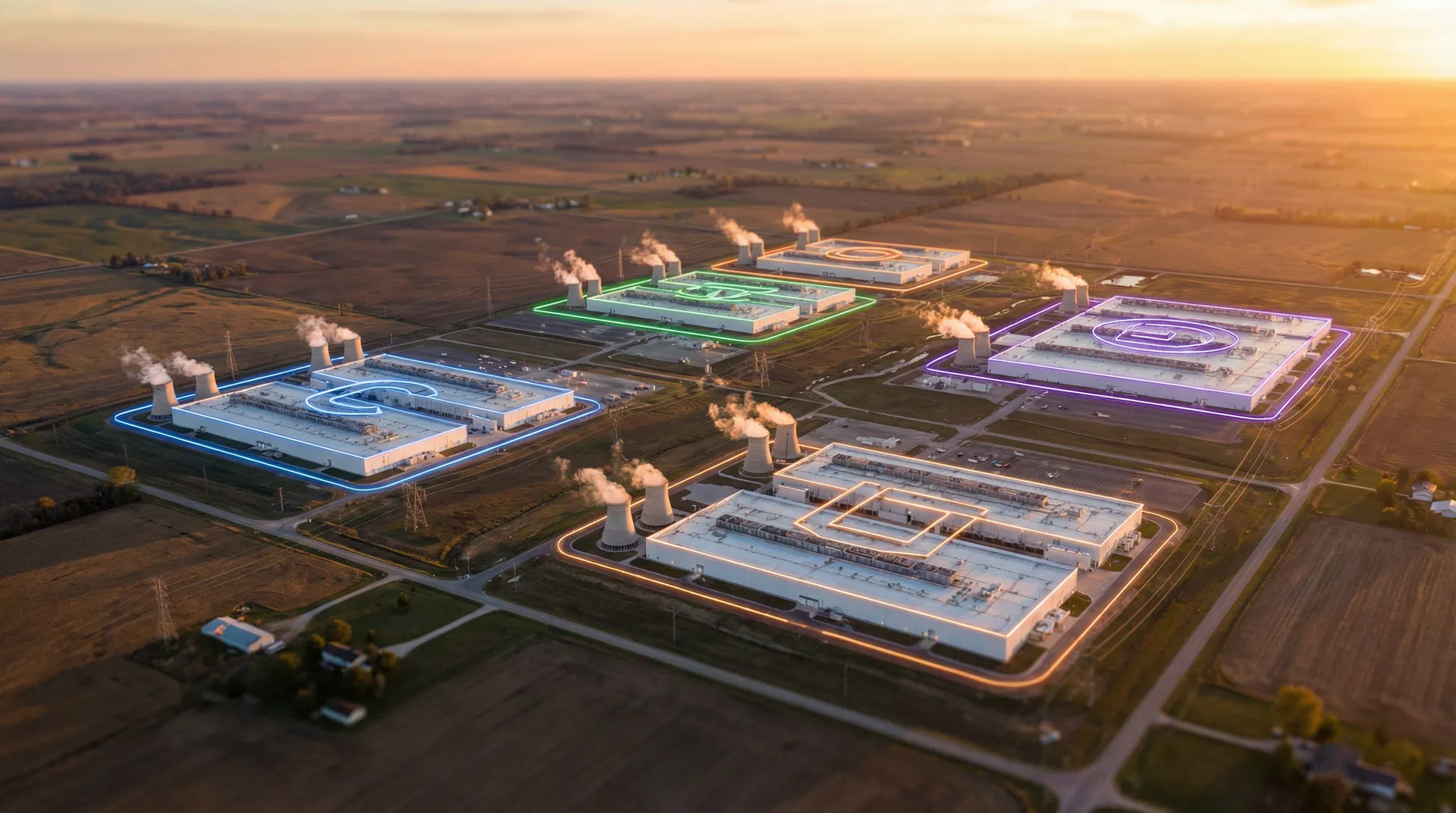
Hyperscaler Data Center Intelligence
141,210 MW filed. $87.5 billion in announced deals. Six companies reshaping America's infrastructure — and the data tells a story that contradicts almost everything you think you know.
Data provided by Spark AI
The Landscape at a Glance
| Company | MW Filed | Investment |
|---|---|---|
| Amazon / AWS | 37,654 | $17.0B |
| Meta | 50,948 | $10.0B |
| Microsoft | 33,721 | $13.3B |
| Oracle | 11,738 | $7.0B |
| 6,492 | $40.0B | |
| Apple | 657 | $0.2B |
| Total | 141,210 | $87.5B |
Meta Is the Real Power King — Not Amazon
Everyone assumes Amazon dominates the data center landscape. By volume of regulatory filings, they lead. But the real story is in the megawatts.
Meta has filed for 50,948 MW of power capacity — more than any other hyperscaler, and 35% more than Amazon's 37,654 MW.
Meta is building fewer, larger facilities — each one a campus of enormous scale. The company with the most filings is not the company building the most power.
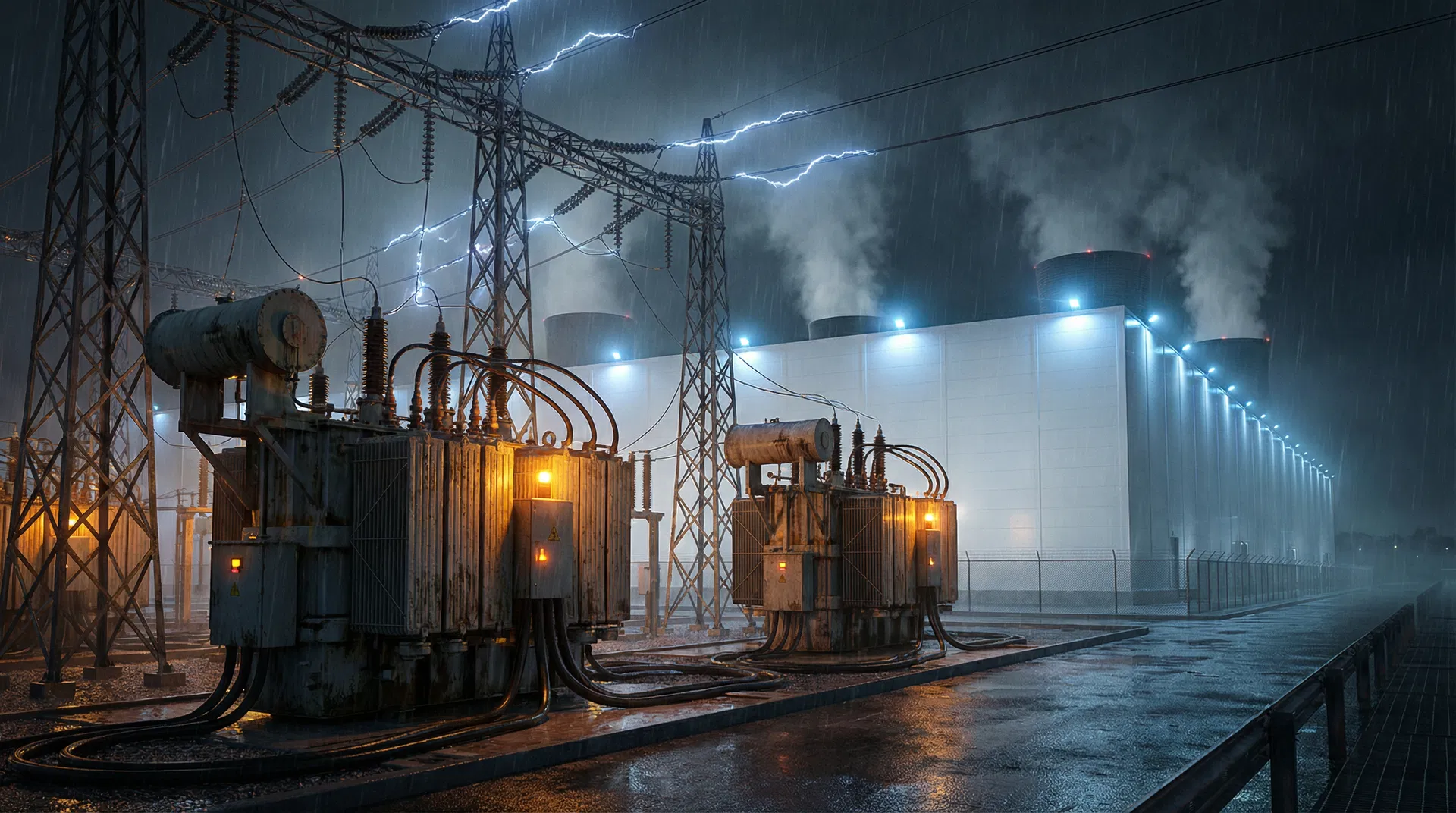
Meta builds fewer facilities, but each one is a power colossus.
MW Filed by Hyperscaler
Google's $40 Billion Paradox
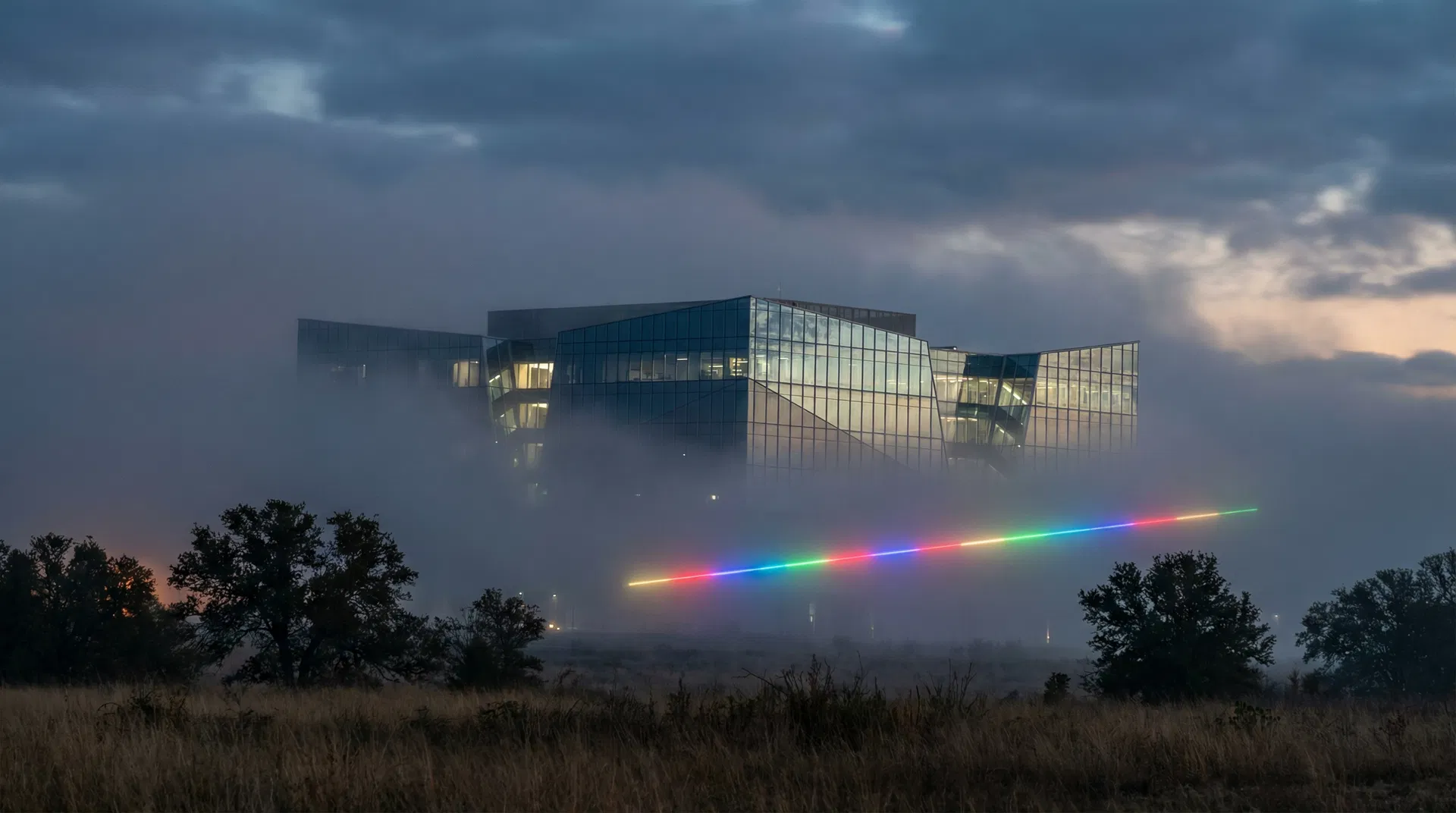
Google's real data center footprint may be largely invisible to public databases.
Google has committed $40 billion to Texas data center infrastructure — the single largest state-level commitment tracked. Yet Google has only 6,492 MW filed — the lowest of any major hyperscaler.
Google is spending $6.16M per MW filed, compared to Meta's $0.20M/MW. That's 30.8 times more. Either Google is dramatically overpaying, or its real footprint is invisible to public permitting databases.
Cost per MW Filed — The Google Outlier
Google spends 13.6x more per MW than Amazon and 30.8x more than Meta.
Oracle Has a Perfect Record — And That Should Worry Everyone Else
Oracle has achieved something no other tracked hyperscaler can claim: 21 approvals, 0 denials. A 100% approval rate. The Saline Township, Michigan Stargate campus — a $7 billion project — was approved unanimously by the local planning board.
Oracle is not moving slowly. Oracle is moving precisely. In a regulatory environment that is becoming increasingly hostile to data center development, Oracle's approach may prove to be the most scalable. Zero wasted capital on failed sites, zero community opposition to manage, zero reputational damage. The tortoise may be winning.
Approval Rates Compared
2025 Was Not a Growth Year — It Was a Phase Transition
In 2025, the pace of data center filings exploded. Regulatory activity across the top four companiesroughly doubled compared to any prior year — aphase transition, not linear growth.
This is not linear growth. This is an inflection point. The industry roughly doubled in a single year. The AI infrastructure buildout has shifted from planning to execution, and the regulatory system is absorbing a volume of applications it was never designed to handle.
Year-over-Year Filing Acceleration
Amazon's 8 Denials Are a Feature, Not a Bug
Amazon has the highest absolute denial count: 8 rejections. The conventional reading is bad site selection. The unconventional reading: Amazon's denial rate is 1.28% — approved 98.72% of the time while filing at a pace that dwarfs every competitor.
Oracle's 21-for-21 record is impressive, but Amazon has secured 3.2x more power capacity. In a land grab, speed beats precision.
Apple Is Either Irrelevant or Invisible — And the Answer Matters
Apple has just 657 MW filed. For a $3+ trillion company with one of the world's largest consumer cloud ecosystems, this footprint is absurdly small. Apple "deliberately routes through subsidiaries and LLCs."
Three possible realities: Apple genuinely relies on third-party cloud providers. Apple has a massive footprint that is invisible to public databases. Or Apple is about to enter the data center arms race. Apple's near-absence from the data is the most interesting signal in this entire dataset precisely because it could mean radically different things.
Apple's Invisibility Index
Wisconsin Is the New Virginia
Virginia has been the undisputed capital of American data center infrastructure for two decades. But this dataset reveals a different geographic center of gravity: Wisconsin.
Both Meta and Microsoft have identified Wisconsin as a primary expansion corridor. Microsoft's marquee deal is a $13.3 billion expansion in Mount Pleasant. The state offers what Virginia increasingly cannot: available land, cooperative governments, Great Lakes cooling water, and communities without infrastructure fatigue.
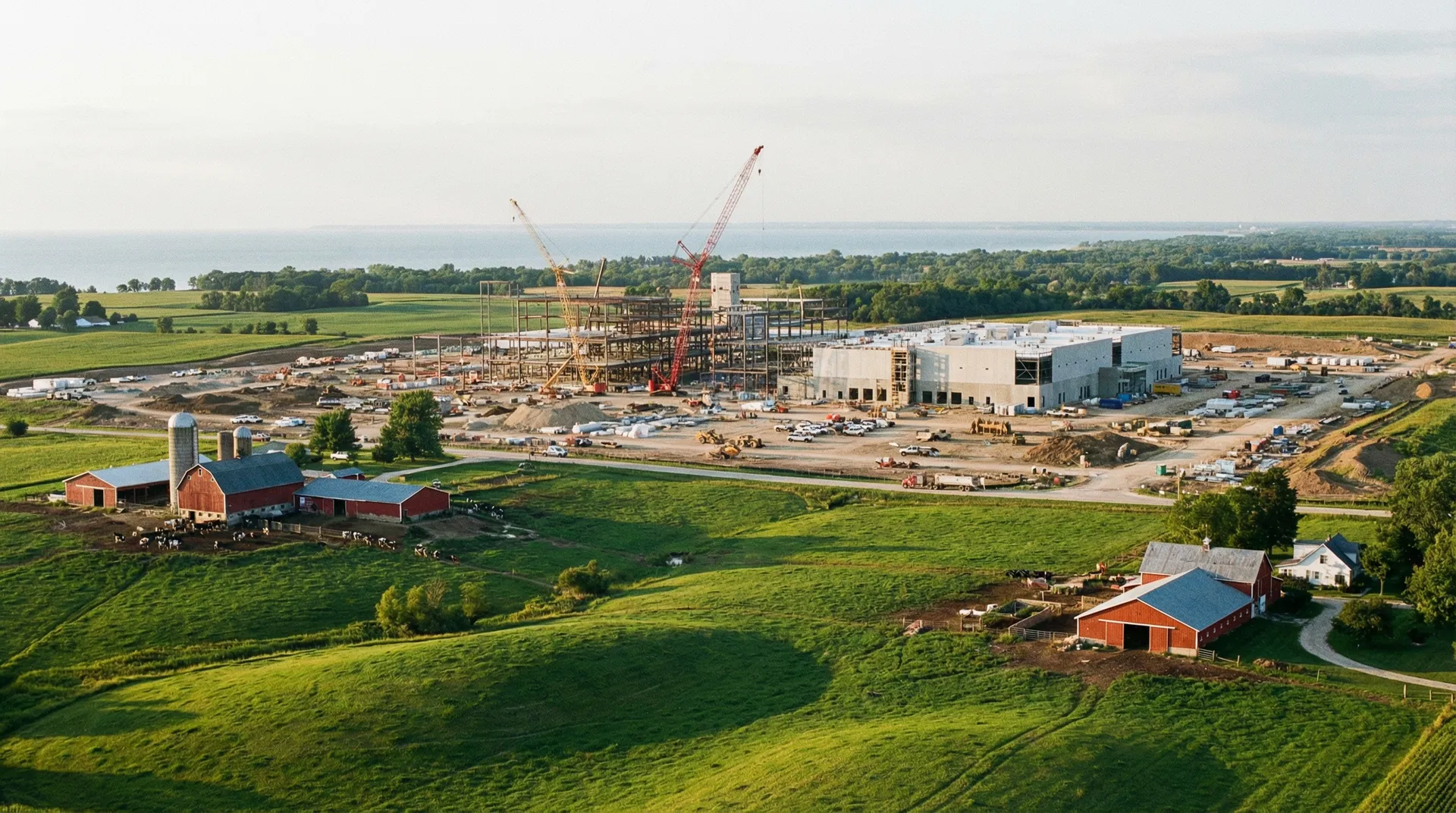
Wisconsin farmland meets industrial-scale tech construction.
Regional Hotspots — Where the Money Is Going
The Nuclear Card Is Being Played
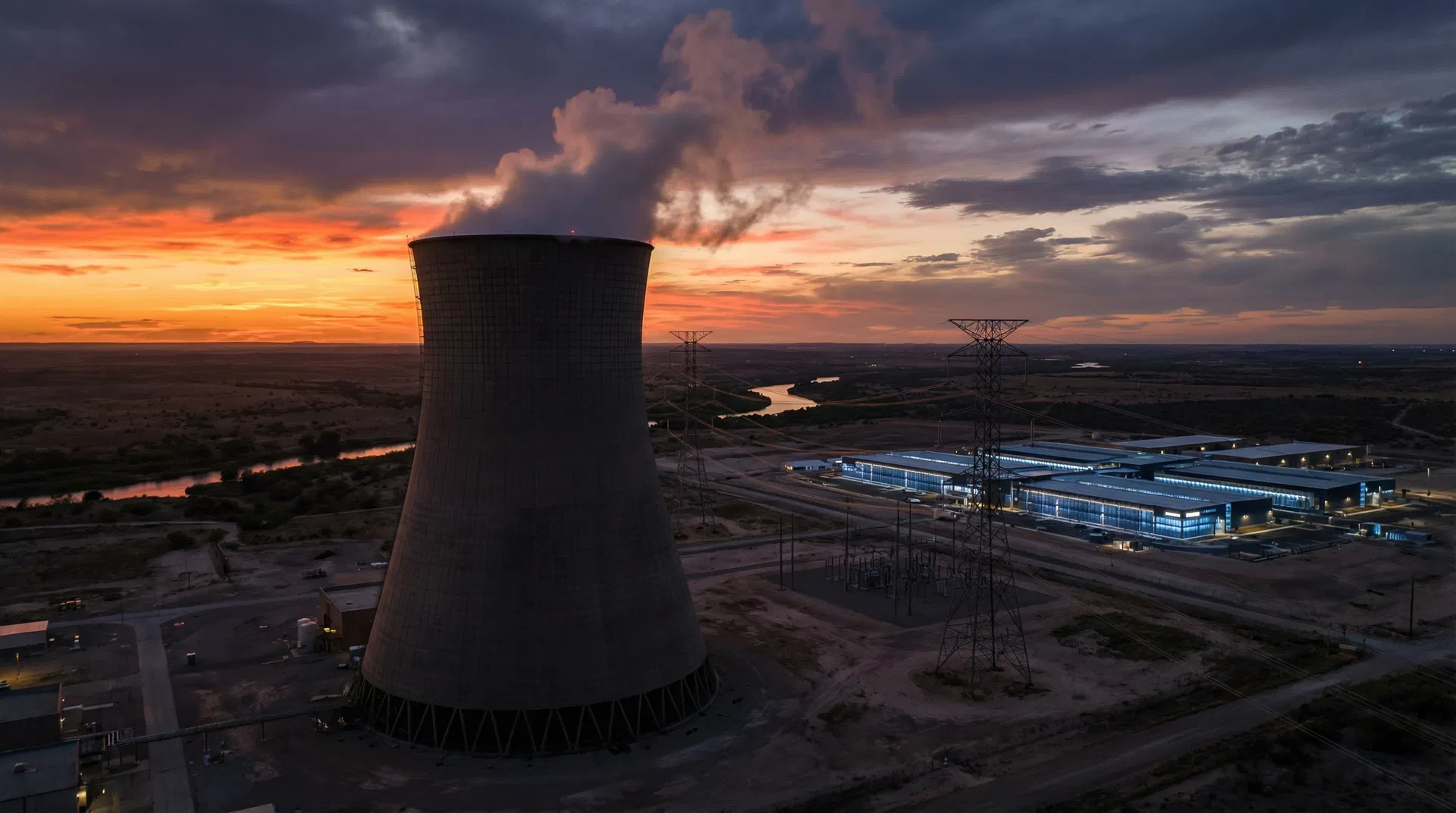
Amazon's Comanche Peak deal signals the convergence of nuclear energy and AI infrastructure.
Amazon's $5 billion Comanche Peak, Texas deal is described as "nuclear-adjacent." Comanche Peak is home to two operational reactors generating approximately 2.4 GW of baseload power.
Hyperscalers need baseload power that is carbon-free, reliable, and available 24/7. Renewables alone cannot provide that at the scale required. If Amazon is willing to spend $5 billion to sit next to an existing nuclear plant, the next logical step is funding new nuclear construction.
The data center industry may end up building more nuclear capacity in the next decade than the utility industry has built in the last thirty years.
Microsoft's 37 Pending Projects Are a $13 Billion Bet
Microsoft has 37 projects still pending — the largest active pipeline of any tracked company — a significant portion of their total filings still unresolved.
Each pending project represents capital committed to site preparation, land acquisition, and engineering that could be stranded if approvals don't materialize. Microsoft appears to be betting that the current window of regulatory openness will not last forever — filing as many applications as possible before the door closes. It is a race against the moratorium clock.
$87.5 Billion Is the Floor, Not the Ceiling
The dataset tracks $87.5 billion in announced marquee investments. But this figure dramatically understates the true scale. These are only the deals that made it into public documents. Apple's near-invisibility proves significant activity occurs outside the public record.
A conservative estimate: the total economic commitment — including construction, operations, power procurement, and supporting infrastructure — likely exceeds $250 billion over the next decade. The $87.5 billion figure is the down payment.
Announced Marquee Investments — The Visible $87.5B
Data sourced from Spark Data Center Intelligence (March 2026). All figures are approximate and based on publicly available regulatory filings and announced investments.