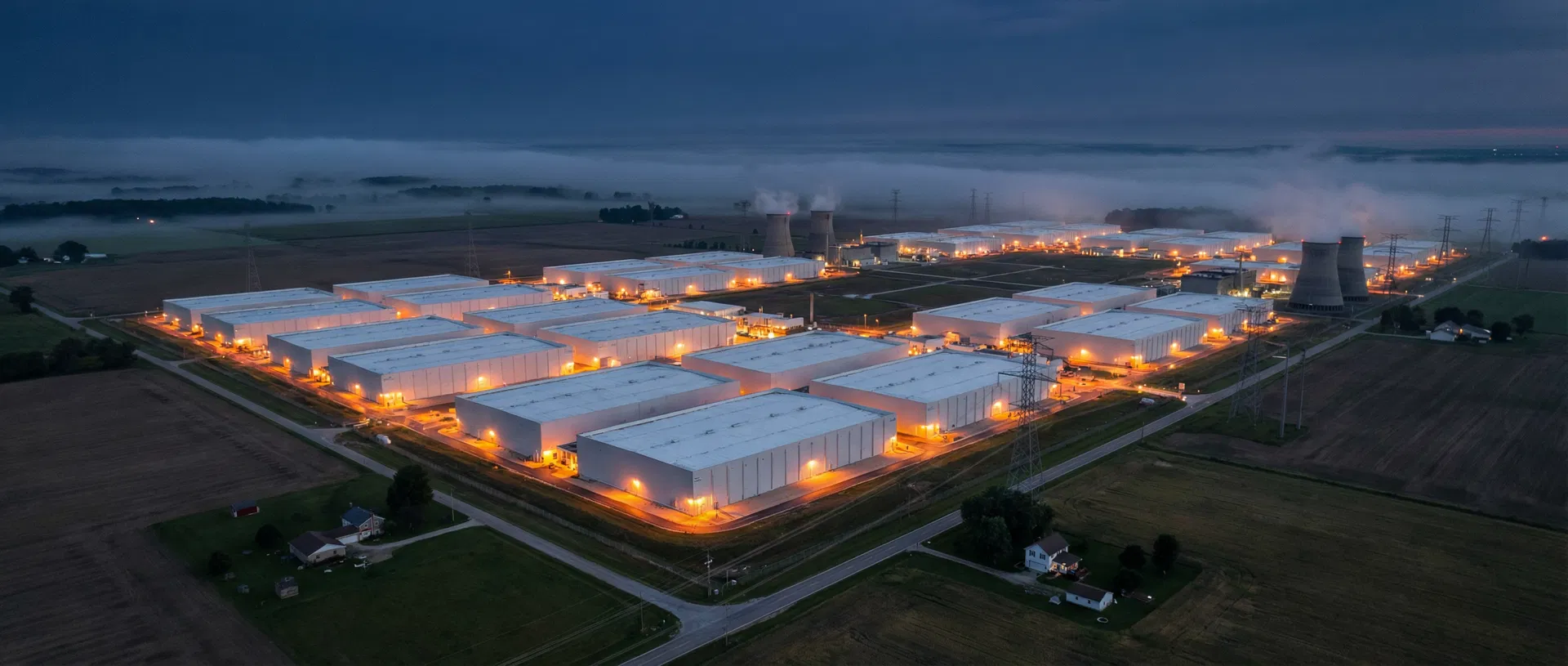
The Hidden Scale of Meta's Data Center Empire
Tens of billions of dollars. Thousands of acres of farmland. Power consumption rivaling entire nations. This is the story most people have no idea is happening.
The New Feudalism: Corporate States
In Richland Parish, Louisiana, a rural community of roughly 19,700 people, Meta is building a data center project codenamed "Hyperion."
The investment? $27 billion. That works out to $1.37 million for every single resident of the parish — man, woman, and child.
The parish's entire annual economic output (GDP) is roughly $805 million. Meta's investment is 33 times that amount. This isn't an investment in a community. It's the creation of a corporate entity that economically dwarfs the local government it sits beside.
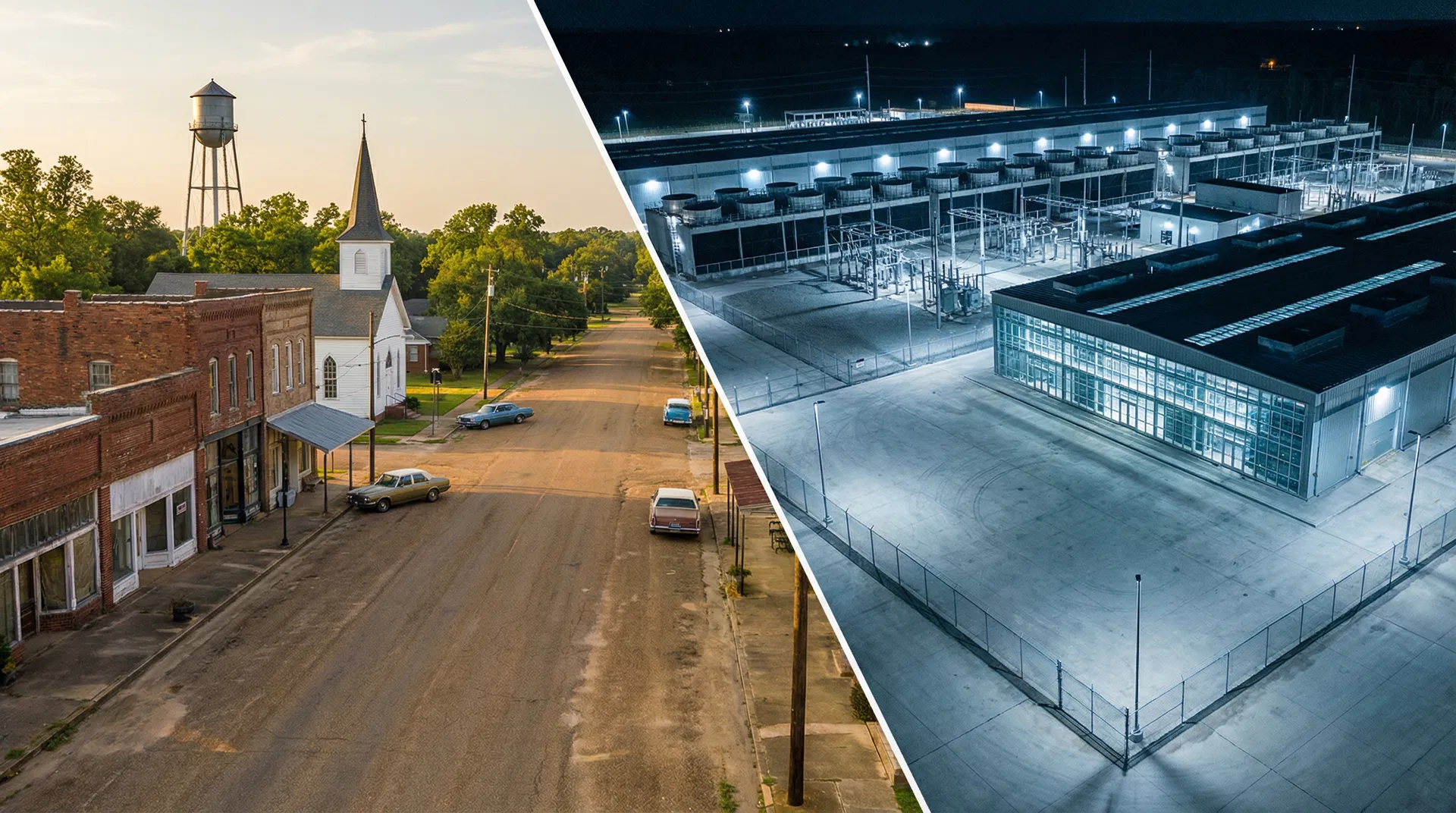
Two worlds collide: a quiet rural parish meets a $27 billion tech campus.
Investment Per County Resident
Meta is Becoming a Private Utility
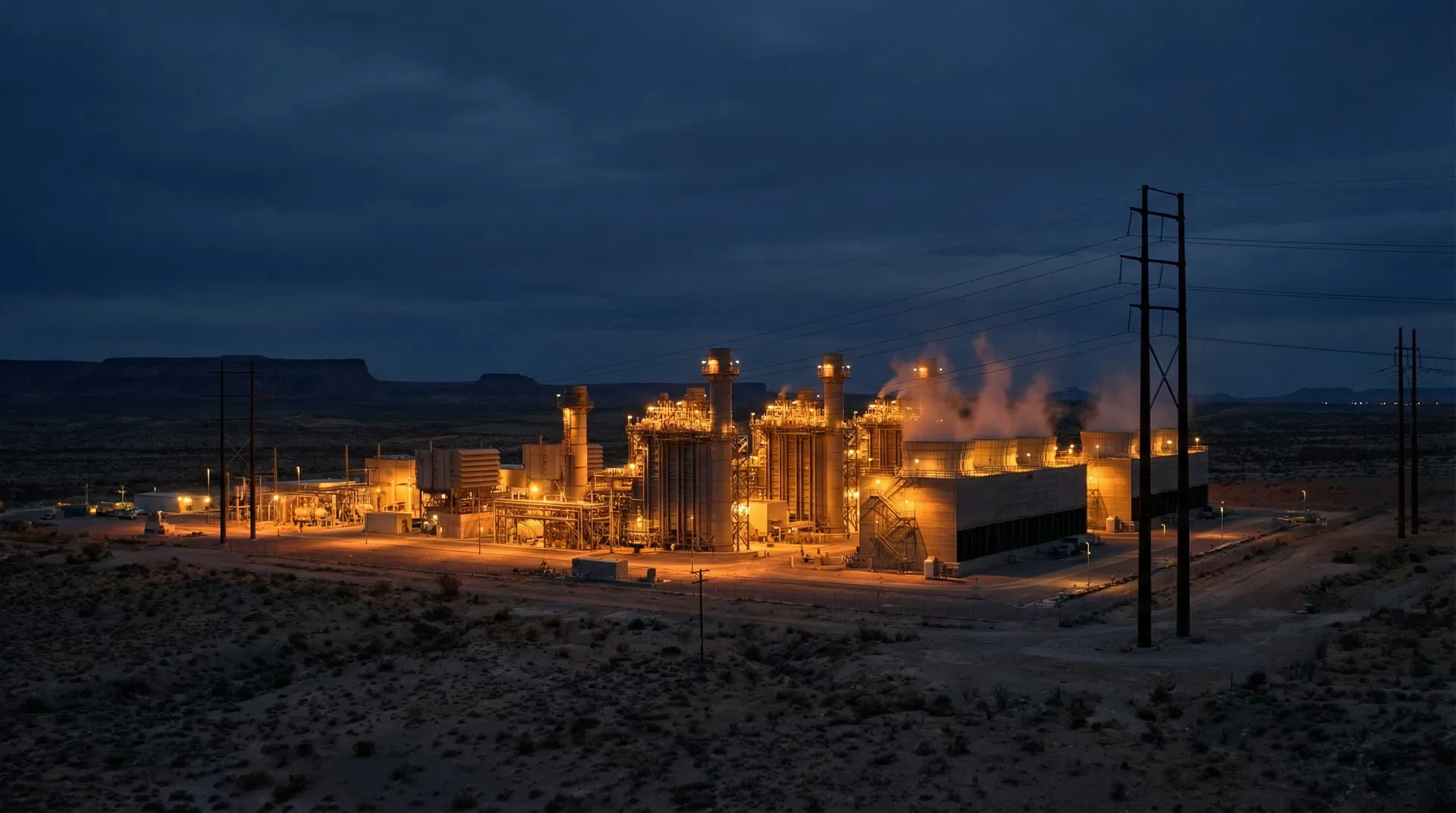
In El Paso, a 366 MW gas plant is being built solely to power Meta's data center.
In El Paso, Texas, Meta isn't just consuming power — they're building their own power plant.
El Paso Electric has filed to construct a 366 MW gas facility (the McCloud plant) specifically to serve the data center. That single plant could power roughly 305,000 homes — nearly every household in El Paso County.
This signals a fundamental shift: tech giants are vertically integrating into energy infrastructure, operating at a scale previously reserved for national governments and regulated utilities.
Power Consumption: Hyperion vs. The World
Click any bar to learn more. Measured in equivalent homes powered.
Hyperion's 5 GW capacity could power over 4.1 million homes — roughly half of New York City's peak demand.
The Anti-Silicon Valley Strategy
Look at the map below. Notice anything? Not a single major site is in a traditional tech hub. No Silicon Valley. No Seattle. No Austin. No New York.
Meta is executing a deliberate strategy to build in rural and mid-sized communities across the heartland. This isn't just about cheaper land. It's a calculated move to find locations with available (or buildable) power, fewer regulatory hurdles, and lower population density — communities less likely to organize effective opposition.
Total Known Land Footprint
Bigger Than the Space Race
Meta's projected 2026 capital expenditure alone is $115–$135 billion — nearly doubling its 2025 spend of $72 billion. Combined with the other hyperscalers (Google, Amazon, Microsoft), Big Tech is on track to spend close to $700 billion in 2026 alone.
To put this in perspective, private corporate investment in AI over the past decade has already surpassed the inflation-adjusted cost of humanity's most ambitious projects — combined.
Historical Mega-Projects vs. AI Investment
All figures in 2024 US dollars.
All figures adjusted to 2024 US dollars. Source: Stanford AI Index Report 2025, Al Jazeera.
"In just over a decade, AI investment has surpassed the cost of landing humans on the moon, developing the atomic bomb, and building the 46,876-mile US interstate highway network."
— Stanford AI Index Report 2025 / Al Jazeera analysis
Power Consumption at Geopolitical Scale
The Hyperion project's 5 GW peak power capacity isn't just large — it's geopolitical in scale. It exceeds the entire installed electricity capacity of countries like Cambodia (~3 GW) and Nepal (~2.3 GW).
It's roughly equivalent to half of New York City's peak summer power demand (NYC uses ~10 GW). Manhattan Island's annual electricity consumption is approximately 57–68% of what a 5 GW data center would consume.
This reframes data centers not as buildings, but as entities with a nation-state-level resource footprint — consuming power, water, and land at scales that demand geopolitical-level governance.
Hyperion (5 GW) vs. National Power Capacities
The Question We Should All Be Asking
We're watching private companies operate at the scale of nation-states, reshaping our landscape, energy grid, and local economies at a speed we've never seen before.
When a corporation's investment is 33x larger than the local economy it sits in — who is really in charge?
Data sourced from public filings, news reports, US Census Bureau, Stanford AI Index Report 2025, and energy capacity databases. All investment figures are approximate and based on publicly reported numbers as of March 2026.